Throughout the growing season- General instructions Planting distances: 6×6 for irrigated olive groves and 7x7m for non-irrigated ones. In general, the planting density should not exceed 20-30 trees per hectare and should be reduced in poor soils or areas with low rainfall. Dense and super-dense planting systems, (planting distances 1.5×2.5 – 4.5m.). Selection of propagating material: Seedlings must be healthy, certified and of a suitable variety (adapted to local conditions and resistant or tolerant to diseases and pests). Planting should be done in late autumn – early winter in mild climate areas and late winter in cold areas. It is recommended that young saplings be pruned until the central stem (trunk) becomes woody. Pruning should be applied in winter at the same time as harvest when fruiting is important or after harvest and always before flowering. In areas where there is a risk of frost pruning should be done when the plants enter the vegetative period (early spring). These planting distances provide excellent fertilization, available water and microclimate conditions. Number of plants greater than 50/hectare, due to excessive moisture within the tree canopy increases the susceptibility to enemies and diseases and forces the renewal of the above-ground part of the olive trees after 10-12 years. This ensures resistance to the climatic conditions of the area, the normal production of olives and the reduced use of plant protection products. Reducing the risk of frost. Avoiding injury and neck rot, while at the same time achieving better conformation During this period we have the smallest fruit losses and the least chance of damage from 3 Pruning should always be done in dry weather. frost Throughout the growing season
Types of pruning: Formative pruning: Gives the desired shape of the trees Fruiting pruning: Usually annual during or towards the end of winter. It is recommended to open the center of the crown by removing the lamargo or very vigorous shoots with simultaneous thinning of shoots in the arms or underarms of the tree. Renewal pruning: In old trees or in abandoned olive groves that are about to go back into production, renewal pruning is recommended, which usually includes large incisions at the branching points of the main branches (crossings).
In young trees for the their rapid entry into fruiting, Good pruning and ventilation of the tree must be the first measure to reduce attacks by enemies (mainly coccoids) and diseases. When dense plantings are chosen, good lighting and ventilation of the tree must be ensured with the corresponding shaping system and pruning. Pruning products, if infected with diseases or infested with insects, should be removed and burned. It achieves renewal of the tree crown, renewal of vegetation and return to fruiting.
Throughout the growing season = In all types of pruning, medium and large cuts should be covered with special wound healers. If the trees are healthy, it is recommended to cut them and incorporate or deposit the pruning products into the soil. The more the production, the more severe the pruning should be. It is also recommended to remove the veneers and renew the Preventing wood contamination. Enrichment of the soil in organic matter Fertilization is intense in xeric (non-irrigated olive groves). It is divided into total, where we have full production one year and almost no fruit the following year, and partial where one year the production amounts to 60-70% and the next to 30-40%. Each variety manifests the phenomenon with different intensity. For example, Koroneiki shows a small degree of manifestation, while the Halkidiki variety shows a large degree. The mild winter or insufficient soil moisture, but also the drought in spring and summer intensify the phenomenon. A year of high fruiting exhausts the tree and reduces the flowering of the following spring. Severe pruning increases the nitrogen content (%) in the tree. It helps in the development of productive vegetation. Excessive vegetation e.g. Existence of lime trees, leads 5 low regional vegetation (feet) to the reduction of floral shoots.
Throughout the growing season = The early collection of the fruits, respecting the maturity criteria of the variety Tillage : It should not be cultivated the area near the tree (count view). The mechanical treatment of the soil should not exceed a depth of 25 cm and should be done without the use of heavy machinery. It is recommended to maintain natural turf between the rows, with repeated mowing, accompanied by chemical weeding along the planting line or under the trees. In sloping lands, soil cultivation should be kept to a minimum or, if necessary, should be done along the contours. On soils with steep slopes >25%, use terraces or apply no-tillage using chemical herbicides. In less sloping soils green fertilization is recommended (sowing legumes, such as vetch, beans, etc.). It is recommended to preserve the natural vegetation in non-productive areas or zones (olive borders, slopes, etc.) It increases the differentiation of flowering buds thus reducing pareniophoria Avoiding microwounds in the root hairs that act as entrances for soil pathogens Conserving moisture and maintaining the soil structure Erosion prevention Erosion prevention, nitrogen fertilization, soil moisture conservation (especially in areas with high rainfall). Enhancing biodiversity, maintaining beneficial refuges, managing resilience
Irrigation of the crop: Young seedlings during the first three years, have increased irrigation needs. Irrigation is recommended to be applied in olive groves with an annual rainfall of less than 400 mm, in new intensive olive groves (25-40 plants/hectare) and in poor soils with low water capacity, both for oil-making and table olives. The summer season is the most demanding of water, but irrigation is also applied in spring or autumn if we do not have sufficient rainfall. The amount of water required per irrigation amounts to 7-15 m 3 /hectare, depending on the mechanical composition of the soil and the use of the fruit, table or oilable. The total needs of olive groves for irrigation water, beyond rainfall, amount to 350-400 m 3 /acre for table olives and 200-250 m 3 /acre for olives. Water-sensitive periods for the olive tree are considered to be the period just before flowering, the period of fruit set and the first stages of fruit growth, and the period of kernel hardening (7-8 weeks after full flowering) and rapid fruit growth The lack of water (April-June) causes flowering, reduces production and exhausts the olive trees making them vulnerable to enemies such as pollinia, worms etc.
Throughout the growing season= Avoid excessive watering (beyond the actual needs of the plants) It is recommended to maintain the irrigation network and regularly check (every three years) the suitability of the irrigation water when it comes from drilling or from biological purification . Water from sewers or drainage networks must not be used. In areas with a lack of water, the construction of small ponds is recommended.
Nutrition of the olive tree Fertilization treatment must be based on a previous soil analysis that is repeated every three to five years and combined, where deemed necessary, with foliar diagnostics , with the aim of ensuring a satisfactory nutritional balance. For the fertilizer treatment it is necessary 1 The knowledge of the mechanical composition of the soil, pH, conductivity, % percentage of organic matter and calcium carbonate. 2. The production direction (table or oleaginous) 3. The phenological state of the trees and the existence of enemies or diseases 4. The program and the irrigation system, the age and the density of planting the trees. the ideal amounts of water, in addition to waste, also create conditions for the growth of various diseases and enemies (e.g. cycloconium, dako, coccoids, etc.). They also favor infections by soil-borne pathogens. Avoiding salinity, nitrates, heavy metals and microbial load that stress the olive trees Keeping the plants in a nutritional balance increases their resistance to diseases, as well as to conditions of lack of water and reduces fruit loss.
Throughout the growing season = In general, the amount of nitrogen supplied should not exceed 10Kg/hectare even in the most productive estates. It is recommended that nitrogen fertilization be done from mid-winter until flowering, while a part of it is given in the summer. In areas with heavy rainfall and in irrigated olive groves, nitrogen fertilization should be avoided in winter. Phosphate fertilization, in soils of average fertility, should be approximately 1/3 of the administered Nitrogen. To determine the phosphate fertilization, the foliar diagnostic examination is necessary. Potassium fertilization is recommended between 8 Kgr / hectare for dry crops and 10 – 15 kgr / hectare K2O for irrigated ones, always depending on the production in olive fruit. A maintenance fertilization of 1-2 units of Potassium is recommended every year. Boron is a very important element for the olive tree, and nutrient deficiencies in this element are often observed in many areas where olives are cultivated throughout Greece. Correcting boron deficiency is relatively easy by adding borax or boric acid to the soil in the fall through early winter. In productive trees with good growth, it is recommended to add 300-500g. borax or 200-300g of boric acid per tree. In large growing trees or in very calcareous soils, the added amount can be increased up to 1Kg, per tree. excessive nitrogen fertilization favors the growth of many pathogens (insects and fungi) Avoid leaching of nitrates and their transport to the water table and the environment in general In general, the phosphorus requirements of young trees are greater than those of productive age. Adequate levels of Potassium ensure drought resistance, less water loss (transpiration management) and reduced disease susceptibility. Boron deficiency can occur in trees of any age, with faster progression in younger trees. A severe deficiency causes a reduction in flowering and fruiting, fruit drop increases and the fruit is characteristically deformed (drying of the tip). Due to reduced mobility of Boron (binding to clay or lime)
Throughout the growing season= The addition of Boron can be done foliarly, pre-flowering with a borax solution (0.6-0.8%) In general, fertilization is recommended to be done with fertilizers that make it easier to administer the desired units of each item. Green fertilization is recommended. In particularly productive periods, supplementary fertilization is recommended both during fruit growth and immediately after harvest. Correction of Boron deficiency. The effects of tree exhaustion are reduced and the “storehouses” of nutrients are renewed Throughout the growing season Special instructions (Plant protection) Weed management Weeds compete with olive trees in the absorption of water and nutrients, they create problems during harvest, when they are dry they increase the risk of fire during the summer months, they are hosts of pests, they increase the risk of frost in olive groves in cold climates. At the same time, however, their presence in the olive grove also has positive effects such as protecting the soil from erosion, attracting beneficial insects, enriching the soil with organic matter, and enhancing biodiversity. The requirements for weed management in the olive grove depend on the age of the trees, the season of the year and whether it is an irrigated or non-irrigated olive grove. The choice of the appropriate intervention method depends on these conditions but also on the type of weeds, which requires the correct identification of the species and the monitoring of their presence in the field so that the appropriate measures to deal with them can be taken in time.
< p>Treatment – Preventive measures Avoiding fields to establish olive groves, which have a problem of difficult to control weeds. Dealing with difficult-to-control weeds (e.g. perennial summer species, herbicide-resistant weeds) is more effective and sometimes only possible if it is done before the establishment of the olive grove.
Young olive trees in the first years after their establishment are more vulnerable to competition for water and nutrients from weeds, due to their limited root system. During this time, the olive trees are at risk from competition with weeds.
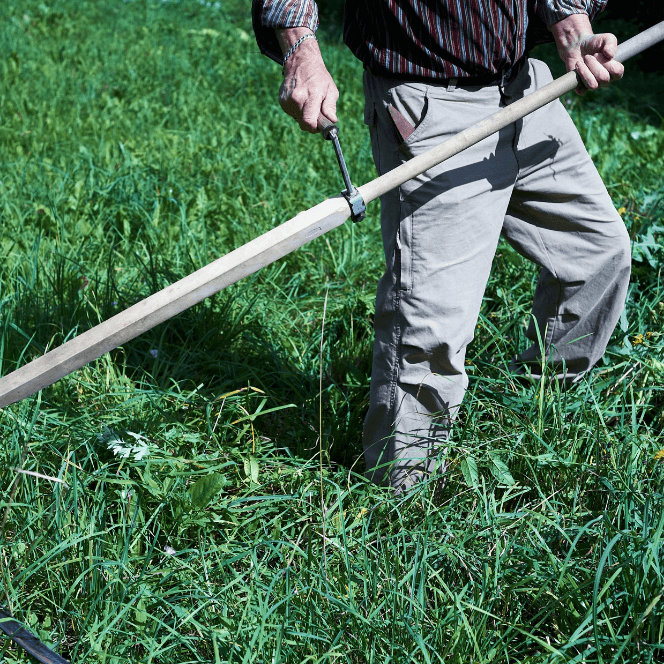
Throughout the growing season = In order to effectively deal with weeds and avoid problems associated with them, it is recommended to follow a combination of methods . Methods for dealing with weeds Mechanical control by tillage. Grass cutting Installation of cover plants from sowing or suitable native plants such as sorrel (desirable species as a cover plant in olive groves) Covering the soil with various cover materials to prevent the growth of weeds due to the induced shading or the release of allelopathic substances Chemical treatment with permitted approved herbicides. It is more effective while the weeds are in their early stages of development. Sorrel, due to its winter biological cycle (it does not compete with olive trees) but also its allelopathic potential, has the effect of limiting the appearance of competing weeds. In addition, cover plants protect the soil from erosion, especially in sloping olive groves. E.g. Covering the soil with straw
Throughout the growing season= Weed management Destruction of perennial summer weeds is recommended Management of winter weeds during the harvest period should be at least temporary It is recommended to maintain natural or artificial vegetation during rainy season especially on sloping soils (slope greater than 10%) In the application of pre-emergence herbicides the applied dose should be reduced in light and calcareous soils and from the second year of application the dose reduction should continue based on the reduction of weed density . In systemic herbicides, the dose is modified according to the type of weed. Pre-emergents are applied with sufficient soil moisture or when rain is expected or with light incorporation. Adequate soil and atmospheric moisture is required when applying post-emergence herbicides.
They are highly competitive in summer Ease of harvest Anti-erosion measure Reduce soil residues and environmental impact Different sensitivity between species Better action is achieved
Throughout the growing season = Post-emergence herbicides are recommended to be applied by directed spray, and with low pressure and avoid spraying fruits, leaves, shoots, wounds or green bark (young trees). To be preceded by removal of offshoots or greedy shoots. Weed killing should be done by positions. A combination of mechanical weed control (light tillage, hoeing or mowing) between the tree lines and herbicide application only on the lines is recommended. It is recommended to maintain spray zones when applying herbicides. It is also recommended to maintain ecological infrastructures (ecological infrastructures) in an area of at least 5% of the plot, at the borders, or even within the olive grove. Especially with plants (maintenance or planting) that have been found to host beneficials (parasites of the dako and other enemies) such as: Hawthorns, carobs, citrus fruits, oak, oak, aspalathus, sea urchin, cyst, capers, chives, etc. Also keep hedge plants on the borders of the olive groves, bird nests, etc. environmental elements.
Avoid damage to the crop Preservation of biodiversity which favors a better balance in the ecosystem Beneficiary shelters, slowing down the effect of the resistance of enemies, strengthening of biodiversity. Environmental protection